
The Warning Seattle Never Read
I have been saying these things out loud before most of you knew what you were looking at.

On July 29, 2020, five days before the Seattle City Council voted on its plan to defund the police, I called in to the Select Budget Committee and used my two minutes. You can watch it here. This is what I said:
I’m a current UW student, a former prisoner, drug addict, and a supervisor of housing programs in Seattle. The defunding is going to attract and encourage more criminal behavior. It won’t be enough to fund the services communicated, especially housing. As a former criminal, I would have taken full advantage of a lack of police presence to victimize citizens in this city. As a DV victim, SPD saved my life in 2016. I would have been beaten to death had they not arrived. Defunding is a decision for all of Seattle [to make], not 300 people calling in and seven of nine council members.
That same week, I sent the Seattle Times the op-ed below, laying out the full warning and a rational alternative. They never published it.
I am publishing it now, exactly as I submitted it, because in April 2025 the Seattle City Council unanimously passed a resolution acknowledging that defunding the police failed. It took them five years to admit what I said into the record, and put in writing, before the first vote.
Read it and ask yourself who else was not given a microphone, and what it has cost us.
Presented as submitted in 2020. Unedited.
Mayor Durkan has come out against the Seattle City Council’s plan to defund the police. For the first time I find myself agreeing with her. Defunding the police is a ludicrous idea. If the police are defunded by 50%, we, the citizens of Seattle, are going to be victimized in our own communities. This decision will attract a criminal element to Seattle similar to those who gravitated to CHOP. When criminal elements become aware of a lack of police presence, they will gravitate to Seattle just like the homeless did when Mayor Murray advertised services for people on the streets.
Why do I believe this? Because I lived on the streets in the underbelly of society. I used drugs for 27 years and have been to prison three times due to addiction and criminal behavior. Since my release I have worked serving the homeless, worked with people transitioning from prison, assisted recovering addicts, and I am currently a student at the University of Washington. I know both worlds. CHOP was a short-term example, but I’ve lived long-term in a lawless community that “policed” itself and have physical scars from violent encounters, including a gunshot wound, and psychological scars from being beaten and raped. This city is not ready for a lack of police presence.
The City Council is planning to defund the police and proposing that reallocating money to social services will prevent crime. I disagree. Criminals are opportunists; committing crimes is rarely about paying rent or needing access to counseling and treatment. How does the City Council expect this budget cut to address the murders, rapes, and assaults that occur in Seattle? How will this budget address the already seriously high rate of violent crime? When the coronavirus took over in March, burglary cases increased “87% in downtown” and “21%” city wide. Why? Because criminals took advantage of the seriousness of the virus. The increase was calculated on the part of the criminals. A police presence would have prevented those crimes, not calling a counselor.
The idea that police officers can be replaced with social workers is impractical in most situations. When using drugs, I participated in criminal acts that were not associated with paying my bills or related to trauma; I committed crimes to have the money to do more drugs. My victims were not chosen strategically, they were just a source for money. Sending a social worker into violent and drug infused settings like these is irresponsible.
Street crime aside, lets consider domestic violence. I was ruthlessly beaten in my home in 2016. If not for 911 and the police I may have been beaten to death. Had a social worker arrived for that call, they would have been in grave danger and we both might have been killed. Social workers belong on crisis response teams for mental health calls. They are excellent resources in diversion programs and mental health crises. When I dialed 911 I needed armed officer intervention.
If we decide to send a social worker into hostile environments, would they not need police training? The likelihood of them adopting the same characteristics as police is high. Is this not what is currently being protested against?
Some, screaming “defund” would benefit from the resulting free-for-all. Others who have no lived experience with drugs and crime seem to be supporting the demands of a small but vocal portion of the population. Reallocating funds is a conversation that belongs to the entire Seattle community. A decision we need to make together, not let 7 of 9 City Council representatives make for us. Defunding the police by 50% will affect the lives of everyone living in this city. Every voice in Seattle needs to be heard, not just the ones making noise right now.
The City has an obligation to keep every citizen in Seattle safe. When the East Precinct closed and a portion of Capital Hill was taken over by protestors, did you consider what would happen if your neighborhood, business, and grocery store were barricaded and thousands of people took over your street? When the shootings started happening, would you have called a psychologist? Or dialed 911? If Seattle loses police presence, and the majority of 911 support, we will be inviting CHOP to overrun our city. The peaceful protestors who established CHOP may have had good intentions, but CHOP attracted drug addicted, violent, and criminally-minded individuals who, in many cases, displayed the same behavior they accused the police of: victimizing others. The City leaders allowed the chaos to continue, ignoring the other citizens whose homes and businesses were being impacted, until 6 people were shot and 2 died.
Why not just be smart and efficient? Follow Durkan’s plan to move a percentage of funding to other areas. Fund programs like LEAD for petty theft, prostitution, and low level drug crimes. Fund mental health services for crises that occur. But keep police on the ground protecting citizens. If police officers use excessive force and are found to violate laws, charge them with a crime! When cops are held accountable they will make different choices. Instead of internal investigations, we can create an independent agency to investigate police misconduct. Make it as easy to report an abuse of authority as it is to call 911.
It is alarming that the fate of Seattle’s safety has been placed in the hands of 9 people who are rushing to make a decision that will have serious long term consequences. The Council members who support this seem to have no idea what they are getting us into, and have not taken the time to develop a plan on how to get us out. The Seattle City Council is igniting a fire they cannot control, just like CHOP. Perhaps they need to spend a little time answering Seattle’s 911 calls before they decide to shut it down. Seattle is not only dying, if these cuts happen, we will become the new Wild West!
Virginia Burton
A few things I want you to notice, six years later.
First, look at what I actually proposed in 2020. Fund LEAD for low level offenses. Fund mental health crisis response. Hold officers who break the law criminally accountable, and build an independent agency to investigate police misconduct. I was never zero tolerance. I was never anti reform. I wanted then what I want now, a complete and rational approach to the problems in front of us, built by people who understand them from the inside.
Second, look at what happened. The claims I made in 2020 have manifested, one by one. And the things they invested in instead are failing, by their own admission. The same council that pledged to defund passed a unanimous resolution in 2025 acknowledging it was a mistake. Five years and untold suffering to arrive back at what a formerly homeless, formerly incarcerated woman told them for free before the vote.
Third, follow the money, because this is the part nobody wants to say out loud. They defunded what protected people and built an industry around what does not. The regional homelessness authority created after 2020 has spent roughly 1 billion dollars in five years while homelessness in King County climbed to 18,365 people, up 9 percent in two years on top of a 26 percent increase the two years before that. A forensic audit found millions unaccounted for, and the mayor and county executive are now deciding whether to disband the agency altogether. A billion dollars. More suffering than when they started. The only thing that grew was the industry itself. That is not a failure of funding. That is a business model, and it is exactly what I document in my book, The Gabriel Plan: Ten Points to Recover Our Nation.
And I have tested this in person. In 2025, at a press conference at the fire station on 4th Avenue, I asked Mayor Harrell a direct question. Of all the money being poured into this crisis, how many dollars would be diverted toward abstinence? Lisa Daugaard and others answered. Zero. Not a percentage. Not a pilot. Zero dollars toward the one outcome that ends a person’s dependence on the system. The people funded to manage addiction had no plan and no budget for ending it, and they said so out loud. I could not have asked for a cleaner confession.
So here is where I land after six years of watching this play out. How about we just focus on opening up solutions for those who want out?
Why are we forcing people like me to fail?
That question is not rhetorical. Every person on the street tonight was once a person a system decided to manage instead of teach. I got out. I built the way out into a program that is running inside a Washington State prison right now, and 98 percent of our released graduates have not committed a new crime. The people our society says cannot improve are living proof that they can, when someone refuses to give up on them.
I am still not yelling. I am solving. On July 19th I will walk 300 miles across WA to fundraise for real solutions that lead people like me to lives with ownership and personal autonomy. Since yelling about the obvious problems have been unsuccessful, I will walk it out. We need your help to move people like me to lives worth living.
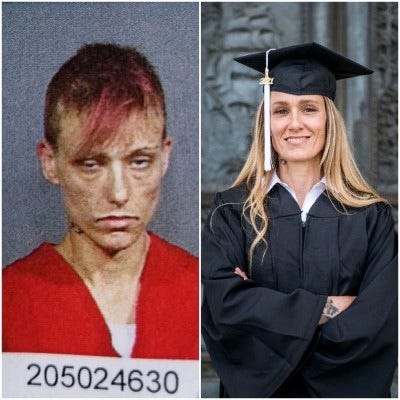
The walk begins July 19. outimpact.org/walk
I’m a cheerleader and I’m behind you. One thing I can say with confidence and factual certainty: there’s nothing new in the world of criminal justice, law enforcement, corrections, drugs, criminals, rehabilitation etc. If you study the last 100 years in depth you’ll likely be able to reach that conclusion. Your enthusiasm and energy and approach is what’s going to gain momentum increasingly and your ability to adjust and adapt will lead to continued success.
Powerful